
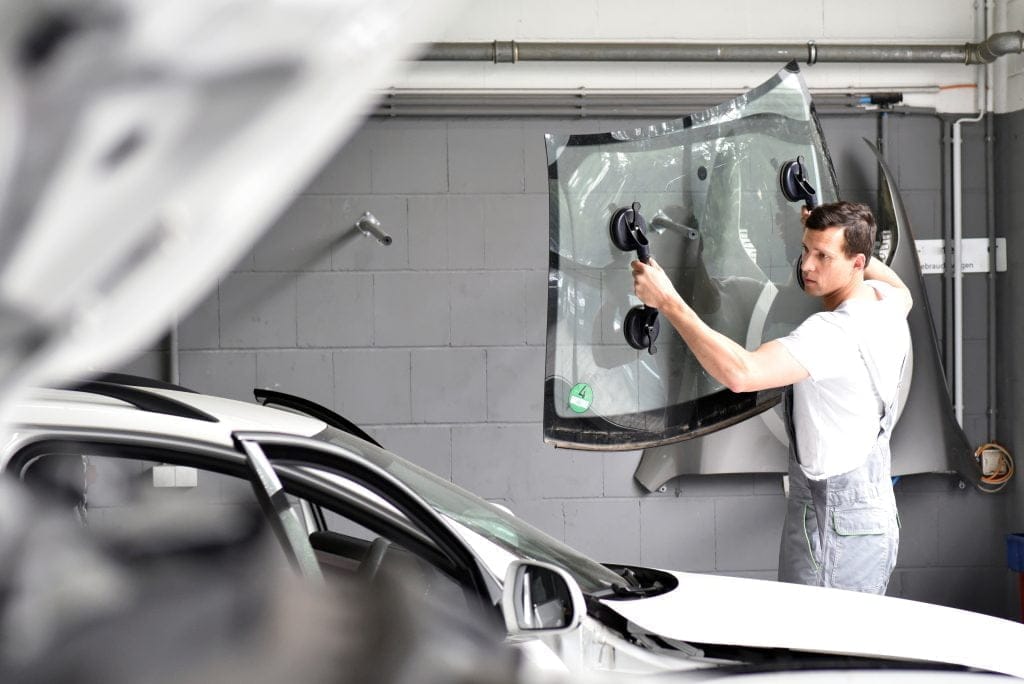
Having your windshield replaced without leaving work or home is genuinely convenient, and for a lot of jobs mobile service is exactly right. But it is not universally the better option, and knowing when a shop visit produces a better outcome will save you a second appointment.
Here is how mobile auto glass service actually works, what you can do to make it go smoothly, and when to choose the shop instead.
What Happens When the Technician Arrives
A mobile job follows the same sequence as a shop job, just in your driveway or parking lot.
The technician first confirms the glass is correct for your vehicle — year, model, and options including rain sensors, heating elements, acoustic interlayers, and camera brackets. Interior trim and the cowl panel come off, along with wipers and the rearview mirror assembly if it is mounted to the glass. The old windshield is cut free of its urethane bead and removed.
The pinch weld — the metal flange the glass bonds to — is then cleaned and prepared. This step matters more than anything else in the job. Old urethane is trimmed to a consistent thin layer, bare metal is primed to prevent corrosion, and the new glass gets primer on its bonding edge. A fresh urethane bead is laid, the windshield is set, trim goes back on, and tape holds the molding while the adhesive begins to cure.
Preparation Is Where Quality Lives
A windshield that leaks or that comes loose in a collision almost always traces back to the pinch weld prep, not the glass. Rushing that step, skipping primer, or bonding over contamination produces a job that looks perfect and is not. This is true in a shop and in a driveway — but the driveway has more variables working against it, which is the whole reason the conditions below matter.
What Mobile Service Needs From Your Location
- Level ground — a steep driveway makes it hard to set the glass squarely.
- Roughly ten feet of clearance around the vehicle so the technician can work both sides and carry a large panel safely.
- Shade if at all possible, or at least a spot out of direct afternoon sun.
- Somewhere the vehicle can sit undisturbed through the adhesive’s safe drive-away time.
- Reasonable protection from wind, because blowing dust landing on a prepared bonding surface is a real problem.
- Keys accessible and the vehicle unlocked at the appointment time.
Clear personal items from the dashboard and front seats beforehand, and remove anything mounted to the glass — toll tags, phone mounts, parking stickers. If a toll tag needs to move to the new glass, mention it, because the adhesive backing does not always survive a transfer.
When the Shop Is the Better Choice
Weather
This is the most common reason a mobile appointment gets rescheduled, and it is not the technician being cautious for its own sake. Urethane cure is temperature and humidity dependent, and the bonding surface has to be dry and clean when the bead is laid. Rain, high wind carrying dust, or extreme heat all compromise the bond. A technician who reschedules because of weather is protecting the quality of the job.
ADAS Recalibration
If your vehicle needs static recalibration after a windshield replacement, that requires a controlled indoor environment: level floor, specific lighting, targets positioned at exact measured distances. That cannot be done in a driveway. Some vehicles only require dynamic recalibration, which is performed while driving and is compatible with mobile service — but you need to know which category your vehicle falls into. Our post on ADAS windshield recalibration covers the difference.
Complications
Rust on the pinch weld is the big one. If the previous installation trapped moisture and the flange has corroded, that has to be addressed properly before new glass goes on — bonding to rust produces a bond that will fail. This is shop work. Similarly, a vehicle with previous poor-quality installation work, extensive trim damage, or an unusual glass configuration is better handled where all the tools and materials are on hand.
Timing and Aftercare
Plan for the vehicle to be occupied longer than the installation itself. The work may take an hour or two; the safe drive-away time for the adhesive is separate and comes after. Ask for that specific number and respect it — it is based on the adhesive used and the conditions on the day, not a generic rule.
Once you can drive, the first 48 hours matter. Skip the car wash, leave a window cracked so pressure from closing doors has somewhere to go, leave the retention tape on for the period you were told, and take it easy on rough roads. We covered the full list in our guide to the first 48 hours after a windshield replacement.
Questions Worth Asking When You Book
- Is the glass correct for my exact trim and options, including sensors and heating elements?
- What is the expected safe drive-away time in today’s conditions?
- Does my vehicle require recalibration, and can it be done mobile?
- What happens if the weather turns on the day?
- What does the workmanship coverage include for leaks or wind noise?
A shop that answers these directly and without hedging is telling you something useful about how they work.
Clear Choice Glass Can Come to You
Mobile service is the right answer for most straightforward windshield work, and the shop is the right answer when conditions, recalibration requirements, or vehicle condition call for it. The important thing is making that call deliberately rather than defaulting.
Clear Choice Glass and Mirror provides auto glass repair and installation for drivers throughout Palestine, TX, and the surrounding area. Contact Clear Choice Glass or call 903-727-0425 to discuss your vehicle and your location.